Emporia Level 2 EV Charger, 48A (J1772)
48 A hardwired, 40 A on a 14-50 plug, and the longest cable here at 25 ft.
- 48 A max
- 25 ft cable
- Wi-Fi
Short version: Emporia gives you most of the smart features with a longer 25 ft cable; ChargePoint Home Flex reaches 50 A hardwired and offers a NEMA 6-50 plug version.
The Emporia and the ChargePoint Home Flex are both Wi-Fi-connected Level 2 chargers with J1772 connectors, app scheduling and plug-in or hardwired installs. Emporia tops out at 48 A hardwired with a 25 ft cable; ChargePoint reaches 50 A hardwired with a 23 ft cable and comes in NEMA 14-50 and 6-50 plug versions.
Based on U.S. Department of Energy · Emporia · ChargePoint
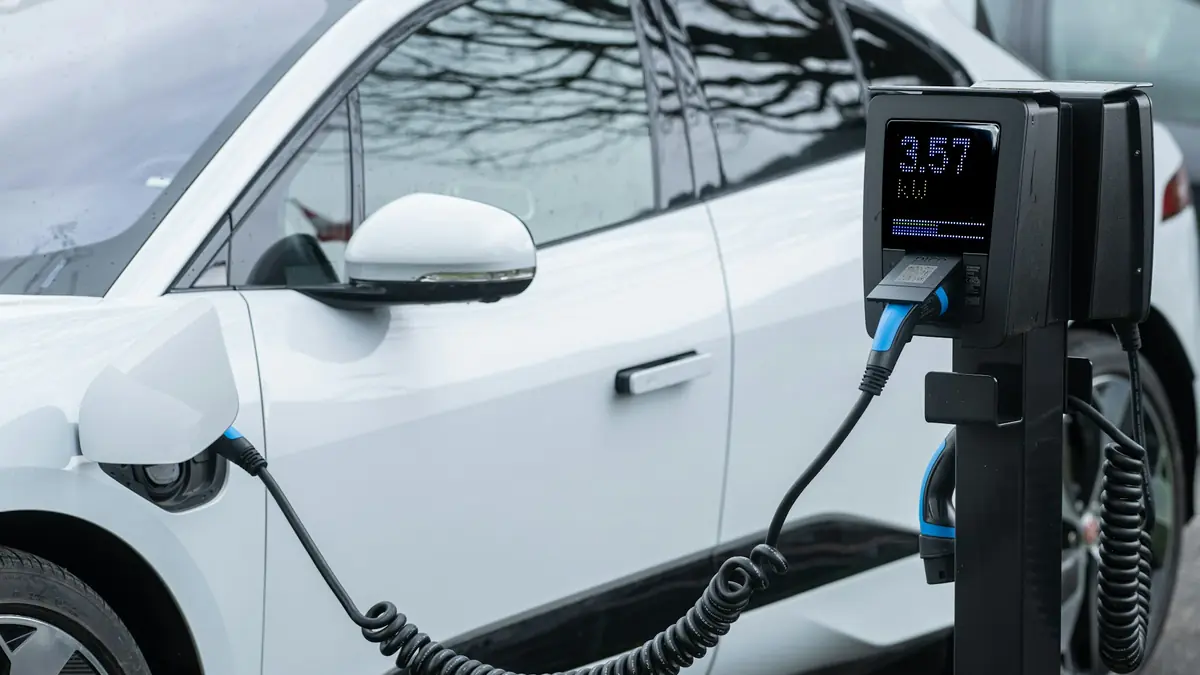
48 A hardwired, 40 A on a 14-50 plug, and the longest cable here at 25 ft.
Up to 50 A hardwired, with NEMA 14-50 and 6-50 plug versions.
We don't list prices because they change daily; Amazon shows the current price and stock when you click. We earn a commission on purchases, which never decides a pick. How we choose.
Swipe the table sideways to see both →
| Spec | Best for most homesEmporia Level 2 EV Charger, 48A (J1772) | Best for 6-50 outletsChargePoint Home Flex (NEMA 14-50) |
|---|---|---|
| Max current | 48 A hardwired; 40 A on NEMA 14-50 | Up to 50 A hardwired; 40 A on plug |
| Circuit needed | 60 A circuit for 48 A | Breaker set to match chosen current |
| Cable | 25 ft | 23 ft |
| Install options | NEMA 14-50 or hardwired | NEMA 14-50, 6-50 or hardwired |
| Smart features | Wi-Fi app, scheduling | Wi-Fi app, scheduling |
| Connector | J1772 (NACS cars via adapter) | J1772 (NACS versions sold separately) |
| Best for | Most garages | 6-50 outlets, ChargePoint app users |
| Price & stock | Check price | Check price |
The 25-foot cable is the practical win. It reaches the far side of a two-car garage or a car parked nose-out, which a 23-foot cable may not, and it saves you from relocating the outlet.
At 48 A hardwired it can use most of the onboard charging capacity of many EVs; on a NEMA 14-50 plug it runs at 40 A. The app handles scheduling around off-peak rates.
Remember the circuit: continuous EV charging is sized at 125%, so 48 A needs a 60 A circuit and 40 A needs 50 A. An electrician should confirm your panel has room.
ChargePoint’s strength is flexibility: you can buy it to plug into a NEMA 14-50 or a NEMA 6-50, or have it hardwired at up to 50 A. If your garage already has a 6-50 welder-style outlet, this is the one that fits without new wiring.
Its app is the same one used across ChargePoint’s large public network, so drivers who already use ChargePoint stations keep everything in one place.
The cable is 23 feet, a couple of feet shorter than Emporia’s. The 50 A setting only helps cars whose onboard charger can accept more than 48 A, which is uncommon.
Both are capable, connected chargers. The choice comes down to your outlet, where you park and how much current your car can take.
NEMA 14-50: either works. NEMA 6-50: ChargePoint offers a matching version. No outlet: hardwiring is often cheaper and safer.
Measure from the mounting point to the car’s charge port, including a loop to the floor. Emporia gives you 25 ft, ChargePoint 23 ft.
A car limited to 32 A or 40 A won’t charge faster on a 48 A or 50 A unit. Check your EV’s onboard charger rating.
Many utilities give rebates on approved smart chargers. Check your utility’s list before buying.
For home charging, both deliver Level 2 speeds with app scheduling. Emporia has the longer cable; ChargePoint has 50 A hardwired and a 6-50 option.
For a hardwired install or a new outlet, yes, and often a permit. A licensed electrician should check your panel capacity.
Tesla and other NACS-port cars can use J1772 chargers with an adapter. Some chargers are also sold in NACS versions.
EV charging is a continuous load, so the circuit is sized at 125% of the charging current: 40 A needs 50 A, 48 A needs 60 A.
Both are sold for indoor and outdoor installation. Follow the installation guide and local code.
We compared the manufacturers’ published specifications (maximum current by installation type, cable length, plug options, connectivity) and checked the circuit-sizing guidance against the U.S. Department of Energy’s home-charging resources.
We have not hands-on tested these products; we compare published specifications, independent measurements and manufacturer documentation, and we update this page when models change. Read the full methodology.